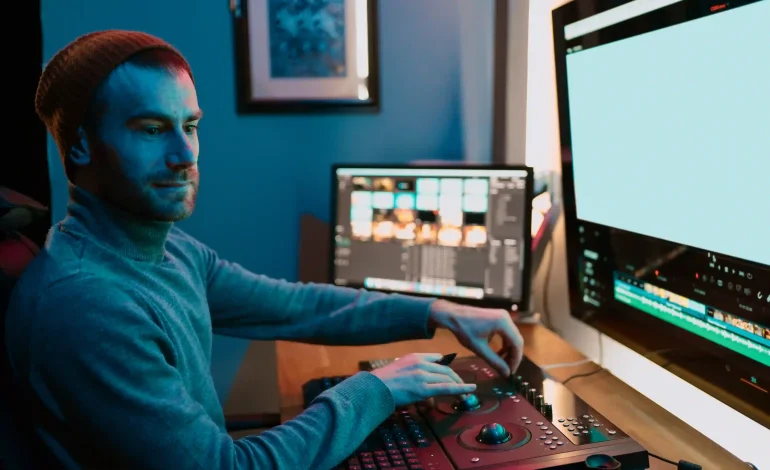

In photography, perfection often blooms in the editing room with the right editing tutorials software. This comprehensive guide explores top tools like Adobe Lightroom and Photoshop, offering step-by-step tutorials to elevate your creativity and photography skills effortlessly.
Why Editing Matters
It is a crucial element of the photography process, editing. It will help you to make your pictures more attractive, fix the flaws, and make your photos reflect the mood or message that you want to express. Editing allows you to correct exposure, contrast, color balance and sharpness and transform a good photograph to a great photograph.
There are several advantages to photo editing
- Improves the Visual Impact: Editing is able to make your photos more beautiful in terms of color and highlights and shadows.
- Fixes Flaws: It can be the elimination of distractions, correcting exposure problems, or the editing of composition but in any case, it will make your images cleaner.
- Shared Artistry: Your creativity can be used to implement special styles and effects to your editing with the help of editing software.
Common Software on Editing
In the case of the tutorial editing, the initial step is the choice of the appropriate software. The following are the most famous editing programs that photographers of all degrees use:
1. Adobe Lightroom
Overview: Lightroom is an effective editing program by photographers. It has easy navigation and powerful functionality of organizing, editing and sharing photos.
Key Features:
- Non destructive editing: Do editing without touching the original image.
- State-of-the-art color correction features: Fine-tune the white balance, saturation and vibrance.
- Photo editing: Make edits on lots of photos simultaneously, and it saves time.
Tutorial Ideas:
- Introduction to Lightroom: How to be a novice photo organizer.
- Lightroom: How to use the fundamentals in Lightroom to edit your photos.
2. Adobe Photoshop
Overview Photoshop is the standard of photo editing and manipulation in the industry. It has sophisticated tools which can be used to do detailed editing, retouching and graphic designing.
Key Features:
- Layers and masks: Edit your image with control features on a case-by-case basis.
- Retouching: Clean up, sharpen and compose.
- Massive filters and effects: Add art effects to your photos.
Tutorial Ideas:
- Photoshop Basics: Photographers- The Basics of Layers, selections and Tools.
- Professional Retouching: Get to know the best ways of eliminating distractions and improving portraits.
3. Capture One
Overview: Capture One is a professional level editing program that is characterized by its advanced color grading and tethering features and is popular with studio photographers.
Key Features:
- Outstanding color processing: Capture One is better at color processing and grading.
- Tethering: Use your camera to edit your image in real-time that is shot.
Customizable workspace Customize the interface to your working process.
Tutorial Ideas:
- Introduction to Capture One: The interface and workflow.
- Learning to color grade in Capture One: Techniques to make amazing color results.
4. Affinity Photo
Summary: Affinity Photo is an inexpensive alternative to Photoshop that has several similar features, but is not based on a subscription model.
Key Features:
- Professional retouching: Just like Photoshop, but efficiency-oriented.
- Non-destructive editing: The images are edited, but not the original file is changed.
- Single purchase: It does not need a subscription, and that is why it fits the budget.
Tutorial Ideas:
- Introduction to Affinity Photo: Essential Elements and Bells.
- Blending Multiple Images in Affinity Photo: How to make Composite Photos.
The Techniques of Essential Editing
No matter which software you are going to use, there are a few basic editing tricks that you have to know:
1. Regulating Exposure and Contrast
Begin correcting the exposure of your pictures. Brightness and contrast can be added by using sliders to either add or reduce brightness and contrast. These adjustments can be of great help to an image that is too flat or too dark.
2. Color Correction
Adjust your photos to the temperature and tint using the color balance tools. This is specifically needed in order to make skin tones look natural and colors appear bright.
3. Cropping and Straightening
It is important to frame your subject in the right manner. Crop tools can be used to make it a better composition and remove distractions. By making sure that your horizons are straight, you improve on professionalism.
4. Sharping and Noise Cancelation
Once it has been edited; use sharpening to make details sharper. Also, edit by removing noisiness, particularly in dark pictures.
5. Creative Effects
Make use of filters, vignettes and other artistic effects to give a special touch to your photos. This may assist in setting up your style and make your work different.
Frequently Asked Questions (FAQs)
1. Which is the most recommended editing software?
Adobe Lightroom can be recommended to a beginner because of its user-friendly design and the necessary editing tools. It can be adjusted and processed in batch mode very fast hence suitable for beginners.
2. Am I able to apply free editing software?
There exists some free editing software, of course, like Gimp and Darktable. They might lack the functionality of the paid software, but they still have the ability to offer powerful tools in the realm of basic to advanced editing.
3. What do I need to know in order to be a good editor?
Editing techniques can be taught best in the form of practice and tutorials. The internet, especially YouTube, photography blogs, and classes through websites such as Udemy, are useful in ensuring that you become a better editor.
Conclusion
The skill of photo editing is a critical aspect that any photographer ought to master in order to make his or her work more outstanding and able to express the inner world. With the assistance of robust software, such as Photoshop, Adobe Lightroom, Capture One, or Affinity Photo, you can discover the potential of your images. When looking through different tutorials on editing, always keep in mind to practice and to experiment with different styles until you discover the one that appeals to your artistic vision. Happy editing!